Search is splitting into three overlapping disciplines, and the acronyms are confusing business owners. SEO, AEO and GEO all aim to get you found, but each targets a different system. At SparkGrowth Web Solutions, we explain these differences daily to clients across the USA, UAE and Australia. Here is a plain-English breakdown of each one and how to prioritize them.
What Is SEO?
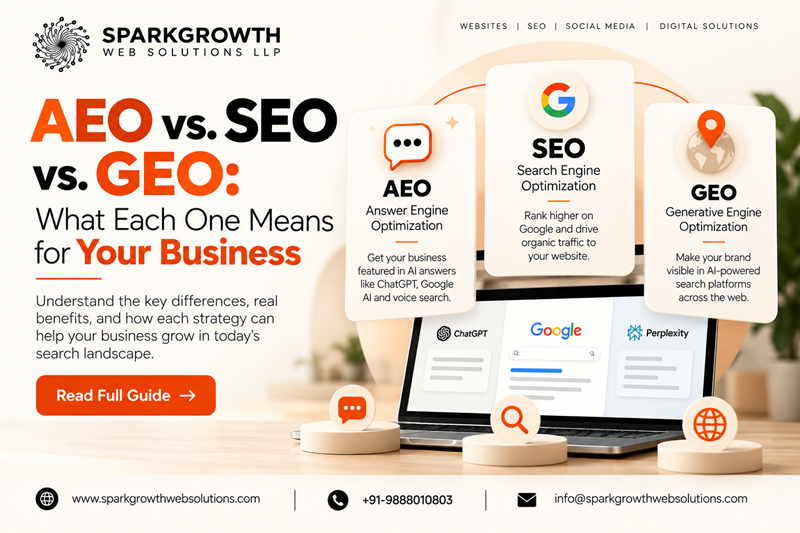
Search engine optimization is the foundation. It helps your pages rank in traditional results through relevant content, technical health and authority. Google’s own SEO Starter Guide covers the basics. Without strong SEO, neither of the other two disciplines works well, because AI tools usually draw from pages that already perform in search.
What Is AEO?
Answer engine optimization focuses on being the direct answer to a question. That includes featured snippets, voice assistants and AI-generated summaries. AEO rewards concise, well-structured answers placed near the top of a page, supported by clear headings and FAQ sections. If a customer asks “how much does a plumber cost?”, AEO is about being the sentence that gets read aloud or quoted.
What Is GEO?
Generative engine optimization targets AI platforms such as ChatGPT, Gemini and Perplexity. The goal is to be cited or recommended inside a generated response. Our guide to what GEO is and whether your business should care goes deeper. GEO leans on brand mentions, entity clarity and trustworthy sources across the web, not just your own site.
Where They Overlap
All three depend on quality content, clear structure and credibility. Structured data supports each of them, and Schema.org remains the shared vocabulary. Building topical authority helps across the board, because a site that covers a subject thoroughly is easier for both algorithms and language models to trust. Google also explains how its AI features in Search select sources, which reinforces the same fundamentals.
Which Should You Prioritize?
Sequence matters. Start with SEO fundamentals: crawlable pages, fast load times and intent-matched content. Then layer AEO by adding direct answers and FAQs to your key pages. Finally, add GEO through brand mentions, consistent business information and expert authorship. Moz’s Beginner’s Guide to SEO is a useful refresher for step one. Use intent-based keyword research to decide which questions deserve answer-style content. For help building the full roadmap, explore our SEO services. Search Engine Land’s guide to SEO also offers wider industry context.
Frequently Asked Questions
Is AEO different from SEO?
AEO is a subset of SEO focused on direct answers. It uses the same foundations but formats content so search engines and assistants can quote it quickly.
Do I need GEO if I already do SEO?
Yes, if your customers use AI tools to research purchases. GEO adds brand mentions and entity signals that traditional SEO often overlooks.
Which one delivers results fastest?
AEO changes, such as adding concise answers and FAQs, can show results within weeks. SEO and GEO usually take several months to build momentum.
Can one strategy cover all three?
Largely, yes. A strong content strategy with structured data, expert authorship and consistent branding supports SEO, AEO and GEO together.
Final Thoughts
You don’t need three separate strategies, just one that is built in the right order. SparkGrowth Web Solutions helps businesses combine SEO, AEO and GEO into a single practical roadmap. Contact our team for a visibility review.