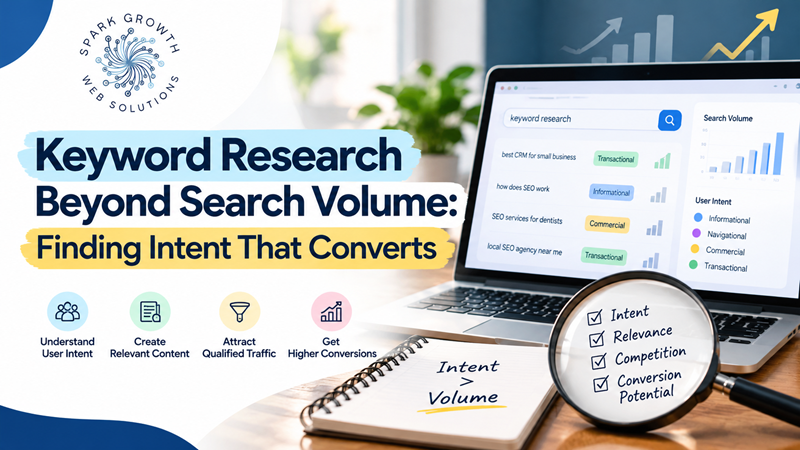
Search volume is the easiest keyword metric to find, which is exactly why so many content strategies lean on it too heavily. A keyword with 10,000 monthly searches sounds more valuable than one with 200 — until you consider that the smaller keyword might convert at ten times the rate, because the person searching it is much closer to actually buying. SparkGrowth Web Solutions weighs intent alongside volume in every keyword strategy, because volume alone routinely leads businesses toward traffic that never converts.
Why Volume Alone Is a Misleading Metric
Search volume tells you how many people search a term. It tells you nothing about why they’re searching it, how ready they are to take action, or whether your business is actually what they’re looking for. A high-volume keyword can be dominated by informational searchers who have no intention of buying anything, while a lower-volume keyword might be almost entirely people actively comparing options before a purchase.
The Four Types of Search Intent
Informational
The searcher wants to learn something — “what is local SEO,” “how does page speed affect rankings.” High volume is common here, but conversion intent is typically low. Valuable for building topical authority and trust, less so for direct conversions.
Navigational
The searcher is looking for a specific website or brand — “SparkGrowth Web Solutions contact.” Volume is usually low unless you’re a well-known brand, but intent to engage is extremely high.
Commercial Investigation
The searcher is comparing options before deciding — “best SEO agency for small business,” “[competitor] vs [competitor] website design.” This is often where the highest-value content opportunities sit, since the searcher is close to a decision but hasn’t made it yet.
Transactional
The searcher is ready to act — “hire SEO agency,” “get a website quote.” Volume is typically lower than informational terms, but conversion rates are dramatically higher.
How to Actually Find Intent-Rich Keywords
- Look at the actual search results for a keyword, not just its volume — if the top results are all comparison articles or “best of” lists, that’s commercial investigation intent; if they’re all guides and explainers, that’s informational.
- Pay attention to keyword modifiers — “best,” “vs,” “near me,” “cost,” “pricing,” and “hire” all signal much higher intent than the bare keyword alone.
- Check what your best existing customers actually searched before contacting you, if that data is available — real search behavior from people who converted is more valuable than any keyword tool’s volume estimate.
- Consider the gap between volume and competition — a moderate-volume, high-intent keyword with less competition often delivers a better return than a high-volume, low-intent keyword everyone else is also chasing.
Building a Balanced Content Strategy
This doesn’t mean ignoring high-volume informational keywords entirely — they play a real role in building topical authority and earning trust before someone is ready to buy. The mistake is treating volume as the primary success metric across your entire content plan, rather than balancing informational content (for reach and authority) with commercial and transactional content (for actual conversions).
A reasonable approach: build genuine depth on informational topics relevant to your industry, but make sure your content plan also deliberately targets the commercial and transactional searches that map directly to what you sell.
Where to Get Help
If your current content skews heavily toward high-volume informational terms with little to show for it in actual leads, that’s a common, fixable pattern. SparkGrowth Web Solutions can help rebalance your keyword strategy toward terms that actually convert, not just terms that look impressive in a volume report.
Frequently Asked Questions
Should I stop targeting high-volume keywords entirely?
No — they still play a valuable role in traffic and authority-building, but they shouldn’t be your only or primary keyword strategy if conversions matter to your business.
How do I know a keyword’s intent without expensive tools?
Search it yourself and look at what actually ranks — the nature of the top results is usually a reliable, free indicator of intent.
Do transactional keywords always have low volume?
Not always, but they’re typically lower volume than informational terms in the same topic area, simply because fewer people are at the ready-to-act stage than the researching stage at any given time.