Every SEO budget has to be split somewhere, and one of the most common places businesses get the split wrong is content freshness versus new content. Publishing something new feels productive in a way that quietly editing an old post doesn’t — but the data on this is fairly consistent: updating and strengthening existing high-performing pages often delivers more reliable return than chasing volume with new ones. SparkGrowth Web Solutions weighs this trade-off with every client’s content plan.
Why Freshness Matters More Than It Gets Credit For
Search engines favor content that reflects current, accurate information — particularly for topics where facts change over time (pricing, statistics, best practices, product details). A page that was accurate and comprehensive three years ago but hasn’t been touched since often quietly loses ground, not because it was ever wrong, but because it’s no longer the most current answer available.
A page that already ranks reasonably well also has something a brand-new page doesn’t: existing backlinks, existing engagement history, and an existing position search engines already trust to some degree. Strengthening that page compounds an advantage you’ve already earned. A new page starts from zero.
When New Content Is Genuinely the Right Call
This isn’t an argument against ever publishing anything new. New content makes sense when:
- You’re covering a genuinely new topic your site hasn’t addressed at all
- A new product, service, or significant business change needs its own dedicated page
- You’ve identified a real content gap — a question your audience asks that nothing on your site currently answers
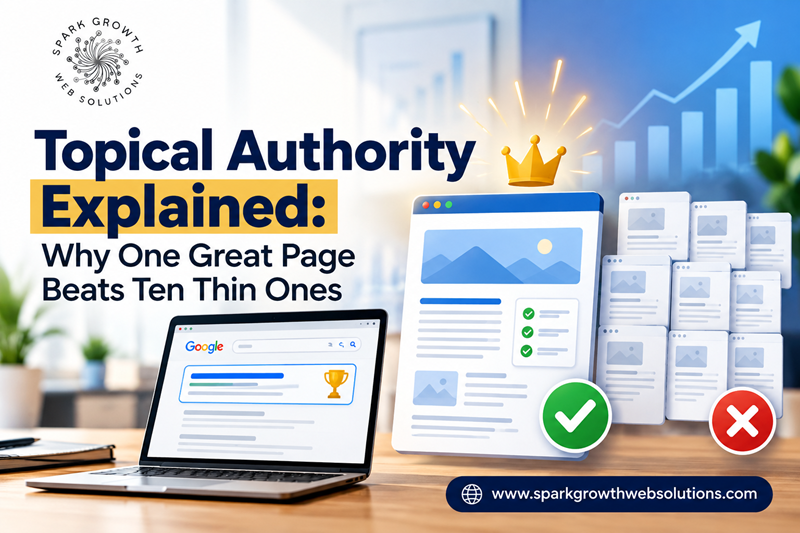
The distinction that matters is between genuinely new ground and a narrower slice of a topic you’ve already covered — the latter is usually better served by expanding an existing page than fragmenting the topic further.
A Practical Way to Decide
1. Audit Your Existing Content First
Before planning new pages, look at what you already have. Which pages once performed well but have declined? Which cover a topic thoroughly except for one now-outdated section?
2. Prioritize Pages With Existing Traffic or Backlinks
A page that already gets some organic traffic or has earned backlinks is a much higher-leverage update target than a page nobody currently finds — the existing signal means an update has something real to build on.
3. Update Substantively, Not Cosmetically
Changing the publish date without meaningfully improving the content rarely helps and can look manipulative if done repeatedly. A genuine update means new information, expanded coverage, corrected inaccuracies, or restructured clarity — not just a timestamp change.
4. Reserve New Content for Genuine Gaps
Once your existing content is in good shape, direct new publishing effort toward topics you genuinely haven’t covered, following the same depth-over-fragmentation principle that builds real topical authority.
A Rough Budget Split That Works for Most Businesses
There’s no universal formula, but a reasonable starting point for most small and mid-sized businesses is roughly 60% of content effort on updating and strengthening existing pages, and 40% on genuinely new topics — adjusted based on how much existing content you actually have to work with. A brand-new site with little published yet will naturally skew toward new content; an established site with years of content will often get more value skewing toward updates.
Where to Get Help Deciding
If you’re not sure which of your existing pages are worth the investment to update, that’s usually the first thing worth figuring out before committing budget either way. SparkGrowth Web Solutions can audit your existing content against performance data and show you exactly where updates would have the most impact.
Frequently Asked Questions
How often should a page be updated to count as “fresh”?
There’s no fixed schedule — it depends on how quickly the underlying information changes. A pricing page might need quarterly review; an evergreen explainer might hold up for years with minor touches.
Does updating the publish date help on its own?
Not meaningfully, and doing it without substantive content changes can look manipulative if it becomes a pattern.
Should a small business with little existing content still prioritize updates?
Not necessarily — if you don’t have much published yet, building out genuine topic coverage first makes more sense than updating a thin existing base.