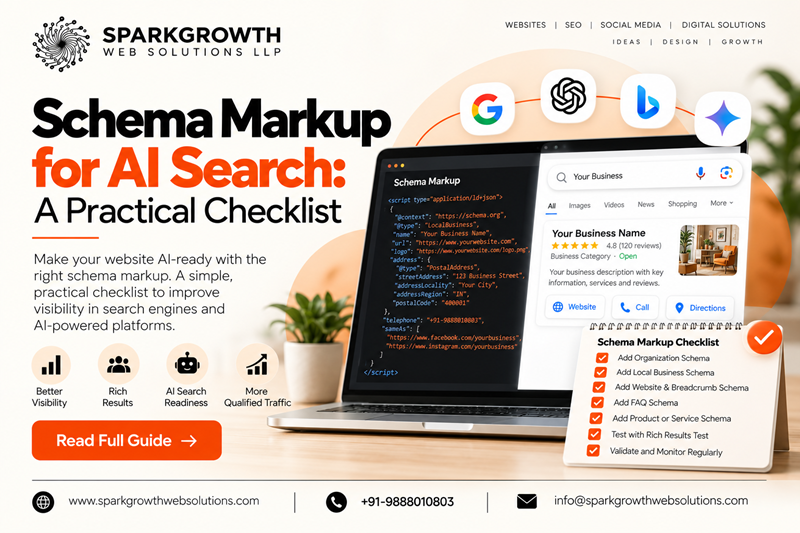
Schema markup is the quiet workhorse behind rich results, knowledge panels and AI-generated answers. It tells machines exactly what your content means, not just what it says. As AI search grows, clean structured data is becoming a practical advantage. At SparkGrowth Web Solutions, we audit schema for businesses in the USA, UAE and Australia, and this checklist reflects what we check first.
1. Start With the Core Types
Every business site should carry Organization or LocalBusiness markup on the homepage, including name, logo, address, phone number and social profiles. Add WebSite and BreadcrumbList markup to help search engines understand structure. The LocalBusiness schema reference lists every property you can use, though only fill in what is accurate and visible on the page.
2. Mark Up Your Content Pages
Blog posts should use Article or BlogPosting schema with author, publish date and modified date. Service pages benefit from Service markup, and product pages from Product and Offer. Matching schema to the page’s real purpose is essential, because Google’s structured data introduction stresses that markup must reflect visible content.
3. Add FAQ and How-To Carefully
FAQ sections remain valuable for AI answers even where Google limits how FAQ rich results appear. Keep questions genuine and answers concise, and make sure the same text appears on the page. This pairs well with an on-page cleanup; our list of on-page SEO fixes that still move rankings shows where FAQs fit.
4. Connect Your Entities
Use the sameAs property to link your brand to official profiles on LinkedIn, Facebook, Instagram and similar platforms. Use author markup to connect articles to real people with credentials, which supports the E-E-A-T signals search engines look for. Consistent naming across markup and the wider web also strengthens NAP consistency.
5. Validate and Monitor
Test every template with Google’s Rich Results Test, then watch the Enhancements reports in Search Console for errors after each site update. Browse Google’s search gallery to see which types are eligible for enhanced appearances. Schema errors often appear after theme or plugin changes, so recheck after any redesign. If you want a professional review, our SEO services include a full structured data audit.
Common Mistakes to Avoid
Marking up content that users cannot see, copying schema from competitors without adjusting details and stacking conflicting types on one page are the most frequent errors. Quality beats quantity: a few accurate types outperform dozens of sloppy ones.
Frequently Asked Questions
Does schema markup improve rankings directly?
Not directly. It helps search engines understand content and can unlock rich results, which often improve click-through rates and visibility.
Which schema format should I use?
JSON-LD is the format Google recommends because it keeps markup separate from your visible HTML and is easier to maintain.
Can schema help my content appear in AI answers?
It can help. Structured data clarifies entities and facts, making it easier for AI systems to interpret and trust your pages, though it never guarantees a citation.
How often should I review my schema?
Review it quarterly and after every redesign, plugin change or major content update so errors do not go unnoticed.
Final Thoughts
Good schema is accurate, specific and maintained. SparkGrowth Web Solutions can implement and audit structured data across your site so search engines and AI tools understand exactly what you offer. Get in touch to start.