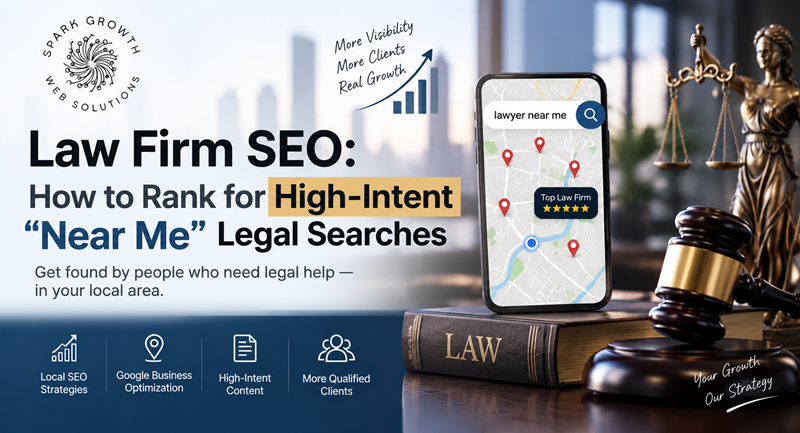
Search “dentist near me” or “emergency dentist” on a phone in the USA, and the first thing that shows up isn’t a list of websites. It’s a map with three highlighted listings, each with a star rating, a “Call now” button, and directions one tap away. That’s the Google Map Pack, and for most dental practices, it’s the single biggest driver of new patient calls, far ahead of the organic listings sitting below it.
If your practice isn’t one of those three names, you’re not losing a little bit of visibility. You’re losing patients to the dentist down the street, even if your clinic is better staffed, better reviewed on other platforms, or has a nicer website.
This guide walks through exactly why dental practices get left out of the dental practice Google Map Pack, how Google actually decides who gets those three spots, and the specific, practical fixes you can start applying this week to improve your dentist Map Pack ranking in the USA.
What Is the Google Map Pack, and Why Does It Matter So Much for Dentists?
The Map Pack (sometimes called the “3-pack” or the Local Pack) is the block of three business listings that appears above the regular organic search results whenever someone searches for a local service. For dental practices, this triggers on searches like “dentist near me,” “family dentist near me,” “emergency dentist,” or “[city] dental clinic.”
Dental care is a near-perfect match for how people use the Map Pack. Most patients aren’t researching dentistry as a topic. They have a toothache, a broken crown, or a new insurance plan, and they want a nearby provider who can see them soon. That’s exactly the kind of urgent, location-based intent the Map Pack was built to serve.
A few reasons the Map Pack matters more for dentists than for many other businesses:
- Mobile-first searches. Most “near me” searches happen on a phone, often from someone already in discomfort and ready to call immediately.
- Trust signals live right there. Star ratings and review counts are visible before a patient ever clicks through to a website.
- It competes with paid ads for attention. Even when a competitor is running Google Ads, the Map Pack sits in the same prime real estate and often gets more trust from searchers.
- It’s where “best dental clinic” searches land. Comparison-style searches like “best dental clinic near me” pull almost entirely from Map Pack results.
If your practice only shows up in the organic list below the map, you’re competing for attention that most mobile searchers never scroll down to see.
How Google Actually Decides Who Gets Into the Map Pack
Google doesn’t publish its exact local ranking algorithm, but it has been consistent about the three factors that drive local rankings: relevance, distance, and prominence.[1]
Relevance
How well your Google Business Profile matches what the searcher typed. A profile with the correct category, complete service list, and detailed business information is far more likely to match searches like “emergency dentist” or “family dentist near me” than a bare-bones listing with just a name and address.
Distance
How close your practice is to the person searching, or to the location they’ve set. You can’t move your clinic, but you can make sure Google has an accurate, verified address and service area so it’s matching you to the right nearby searches in the first place.
Prominence
How well-known and well-regarded your practice is, both on Google (reviews, review responses, photos, posts) and across the wider web (citations, links, mentions on other dental and local directories). Prominence is the factor most practices underinvest in, and it’s usually the difference between two clinics that are otherwise equally close and equally relevant.
Website SEO factors into prominence too. A dental practice with a fast, well-structured, authoritative website tends to outrank one with a slow or poorly optimized site, even if both have similar Google Business Profiles.
Top Reasons Your Dental Practice Isn’t Showing in the Map Pack
Before fixing anything, it helps to know which of these is actually holding your practice back. Most dental practices have more than one of these issues at once.
1. An Incomplete or Unverified Google Business Profile
A profile missing hours, services, insurance information, or photos gives Google less to match against relevant searches. An unverified listing may not be eligible to rank at all.
2. Wrong or Too-Narrow Business Categories
Many dental practices only set “Dentist” as their category and stop there. If you offer emergency visits, cosmetic work, orthodontics, or pediatric care, Google needs that reflected in your categories and services to match you against those specific searches.
3. Inconsistent NAP (Name, Address, Phone) Across the Web
If your practice’s name, address, or phone number is listed differently across directories, your old website, insurance directories, and social profiles, it weakens the trust signal Google uses to confirm your business is legitimate and well-established.
4. Too Few Reviews, or Reviews You’re Not Responding To
Review count and rating are among the most visible prominence signals. A profile with a handful of old reviews and no replies from the practice looks far less active than a competitor with a steady stream of recent, responded-to reviews.
5. Multiple or Duplicate Listings
Practices that have moved locations, changed names, or been listed multiple times by different directory services often end up with duplicate Google Business Profiles. This splits your reviews and signals across two listings instead of consolidating them into one strong one.
6. A Website That Doesn’t Reinforce Local Relevance
If your website doesn’t clearly state your location, services, and service area in its content, title tags, and headings, Google has a harder time confirming that your Map Pack listing and your website agree with each other. This is closely tied to the technical SEO errors hurting dental practice websites that we’ve covered in detail separately, including slow load times, missing schema markup, and broken mobile experiences.
7. No Local Citations or Backlinks
Being listed accurately on directories like healthcare and dental-specific platforms, plus getting mentioned or linked to by local organizations, builds the kind of prominence Google rewards. Practices with almost no presence outside their own website and Google profile tend to rank behind those with a broader local footprint.
8. No Posts, Photos, or Q&A Activity
An inactive Google Business Profile signals a dormant business. Practices that never post updates, add new photos, or answer patient questions in the Q&A section miss an easy, free opportunity to look more active and trustworthy than competitors.
How to Fix It: A Step-by-Step Plan to Rank in the Google Map Pack
1. Claim, Verify, and Fully Complete Your Google Business Profile
Start here even if you think your profile is already set up. Fill in every available field: hours (including holiday hours), services, accepted insurance if applicable, payment options, accessibility details, and a complete business description that naturally includes terms like “family dentist” and “emergency dental care.”
2. Set the Right Primary and Secondary Categories
Choose the most accurate primary category (usually “Dentist” or a more specific option like “Cosmetic Dentist” if that’s your focus), then add every secondary category that genuinely applies: Emergency Dental Service, Pediatric Dentist, Denture Care Center, and so on. This directly improves how your practice matches emergency dentist and family dentist near me searches.
3. Audit and Fix NAP Consistency
Search your practice name across Google, Bing, Apple Maps, Yelp, Healthgrades, and any dental-specific directories you’re listed on. Update every instance so the name, address, and phone number match exactly, including how you format suite numbers and abbreviations.
4. Build a Steady, Ongoing Review Process
Ask happy patients for a Google review at the point of a good experience, such as right after a successful appointment or a five-star moment at checkout. Respond to every review, positive or negative, with a genuine, specific reply rather than a generic template. Consistency over months matters more than a single burst of reviews.
5. Create Location and Service-Specific Content on Your Website
Dedicated pages for “Emergency Dentist,” “Family Dentist,” and each major service, written for your actual city and neighborhood, help confirm relevance to both patients and Google. Avoid duplicating the same generic page across multiple locations if you operate more than one clinic; each location deserves its own accurate, unique content.
6. Fix the Technical SEO Issues Undermining Your Website
A Map Pack listing backed by a slow, broken, or poorly structured website has a ceiling on how well it can perform. Core Web Vitals, mobile usability, secure HTTPS, clean URL structure, and proper heading hierarchy all contribute to the prominence signal Google uses. If you haven’t audited these yet, our guide on technical SEO mistakes hurting dental websites walks through the most common issues and how to fix them.
7. Build Local Citations and Earn Relevant Backlinks
List your practice accurately on reputable local and dental-specific directories. Look for opportunities to be mentioned by local business associations, sponsorships, or dental supply and referral partners. Each accurate, consistent mention adds to your prominence over time.
8. Post Regularly and Keep Photos Current
A monthly update, a seasonal offer, a new team member announcement, or before-and-after photos (with patient consent) all keep your profile looking active. Fresh, high-quality photos of your actual office and staff also build trust faster than stock imagery.
9. Monitor and Answer Your Q&A Section
Patients sometimes ask questions directly on your Google Business Profile. Seed a few common ones yourself (parking availability, walk-in policy, insurance accepted) and monitor for new ones so they don’t sit unanswered.
10. Track Rankings and Patient Actions Over Time
Keep an eye on your Map Pack position for your core search terms, along with the calls, direction requests, and website clicks your profile generates. This tells you whether your changes are working and where to focus next.
Common Map Pack Mistakes vs. the Fix
| Mistake | Why It Hurts You | The Fix |
|---|---|---|
| Incomplete Google Business Profile | Google has too little information to match you to relevant searches | Fill out every field, including services and business description |
| Only one broad category selected | You miss matches for “emergency dentist” or “family dentist near me” | Add accurate secondary categories that reflect all services offered |
| Inconsistent NAP across directories | Weakens Google’s trust in your business identity | Standardize name, address, and phone everywhere you’re listed |
| Few or unanswered reviews | Lower prominence compared to actively engaged competitors | Build a steady review request process and reply to every review |
| Duplicate listings | Splits reviews and signals across two profiles | Merge or request removal of duplicate listings through Google |
| Slow, poorly structured website | Undermines the prominence signal from your web presence | Fix Core Web Vitals, mobile usability, and on-page SEO |
| No local citations or backlinks | Limits prominence signals from beyond your own website | Get listed accurately on relevant local and dental directories |
| Inactive profile (no posts or photos) | Looks dormant compared to active competitors | Post monthly updates and keep photos current |
How Long Does It Take to Rank in the Google Map Pack?
Most dental practices see measurable movement within 60 to 90 days of a consistent effort, assuming the fundamentals (profile completeness, category accuracy, NAP consistency) are addressed early. Review growth and backlink building tend to be the slower-moving levers, often taking several months of steady work to meaningfully shift prominence in a competitive market. Practices in less competitive areas, or those correcting glaring gaps like an unverified profile, can sometimes see faster results.
There’s no way to pay for a better position in the Map Pack, and any agency claiming guaranteed rankings within days should be treated with caution. Sustainable Map Pack rankings come from consistent, accurate, ongoing work, not one-time fixes.
Quick Map Pack Readiness Checklist
- Google Business Profile is claimed and verified
- All fields are complete: hours, services, description, attributes
- Primary and secondary categories accurately reflect every service offered
- Business name, address, and phone number match exactly across all directories
- No duplicate listings exist for your practice
- Recent, high-quality photos are uploaded regularly
- A steady stream of new Google reviews is coming in, and each one gets a response
- Website loads quickly and works cleanly on mobile
- Website content clearly reflects your location and services
- Local citations are accurate and consistent
- Monthly Google Business Profile posts are part of your routine
Frequently Asked Questions
What is the Google Map Pack and why does it matter for dentists?
The Map Pack is the group of three local business listings, with a map and star ratings, that appears at the top of Google search results for local searches like “dentist near me.” It matters for dentists because most patients search with urgent, location-based intent, and the Map Pack captures the majority of clicks and calls before a searcher ever reaches the organic results.
Why isn’t my dental practice showing up in the Map Pack even though my website ranks on page one?
Website rankings and Map Pack rankings are related but separate systems. A strong website helps your prominence signal, but an incomplete Google Business Profile, wrong categories, inconsistent business information, or a lack of reviews can keep you out of the Map Pack even with a well-ranking website.
How long does it take a dental practice to rank in the Map Pack?
Many practices see noticeable movement within 60 to 90 days once profile and consistency issues are fixed, though review growth and citation building are typically slower, ongoing efforts that continue to compound over several months.
Do I need a website to rank in the Google Map Pack?
A website isn’t strictly required to have a Google Business Profile, but practices with a well-optimized, fast-loading website tend to outperform those without one, since website content and structure feed into the prominence factor Google uses in local rankings.
How many Google reviews does a dental practice need to rank well?
There’s no fixed number, since ranking depends on relevance and distance too, but practices that consistently earn new reviews and maintain a strong average rating tend to outperform competitors whose review count has stalled or gone stale.
Can I have more than one Google Business Profile if my dental practice has multiple locations?
Yes, but each physical location needs its own separate, accurately verified profile rather than one profile trying to represent multiple addresses. Duplicate or incorrectly set up multi-location profiles often hurt rankings rather than help them.
What’s the difference between local SEO and Map Pack ranking?
Local SEO is the broader practice of optimizing your online presence, website, citations, and Google Business Profile, for location-based searches. Map Pack ranking is one visible outcome of strong local SEO: the three-listing map result that a well-executed local SEO strategy is working to earn a spot in.
Getting Your Dental Practice Into the Map Pack for Good
Showing up in the dental practice Google Map Pack isn’t about one trick or a single setting you flip on. It comes down to a complete, accurate Google Business Profile, a website that reinforces your location and services, a steady flow of genuine reviews, and consistent activity that tells Google your practice is active, trustworthy, and worth showing to nearby patients.
Start with the checklist above, fix the highest-impact issues first (profile completeness, categories, and NAP consistency), and build from there. If you’d rather have an experienced team handle the technical and ongoing work, Spark Growth Web Solutions’ SEO services and website development team work specifically with healthcare and dental practices to close these gaps and build a Map Pack presence that keeps bringing in new patients. Get in touch to talk through where your practice stands today.
Source: [1] Google Business Profile Help — “Tips to improve your local ranking on Google,” support.google.com